
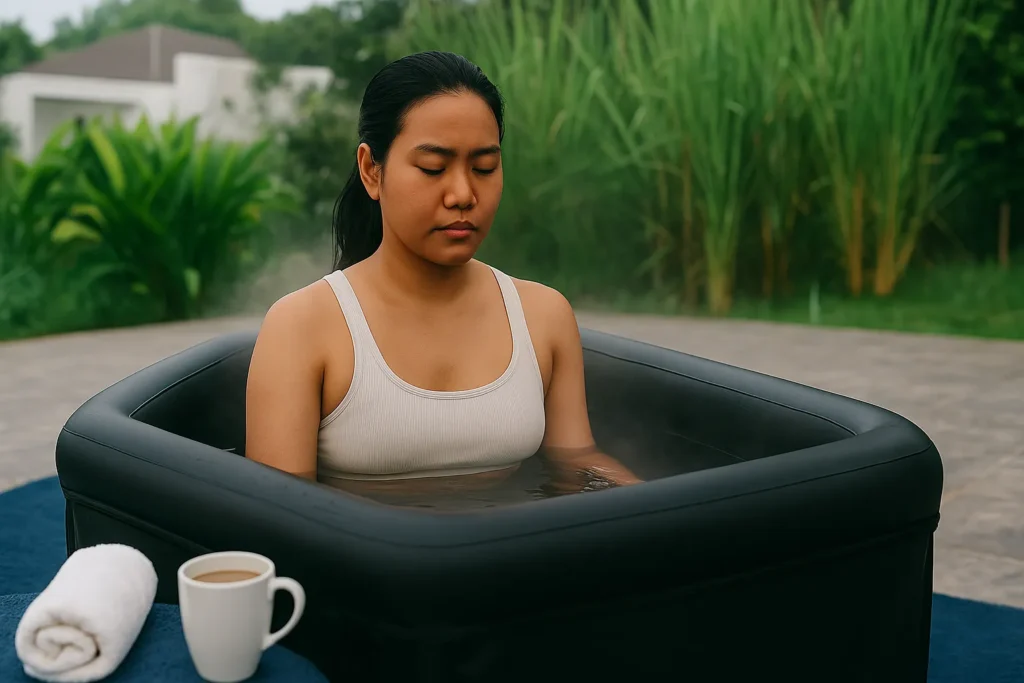
Ice baths (also called cold plunges) are gaining traction with athletes and wellness enthusiasts in Malaysia. By immersing yourself in icy water, you may enjoy quicker muscle recovery, reduced inflammation and a brighter mood. This beginner-friendly guide from Roar Plunge explains what an ice bath is, why people use it, and—most importantly—how to do it safely.
What Is an Ice Bath?
An ice bath is simply a tub of very cold water (often with added ice) used for short-duration cold-water therapy. A common starting range is 10 °C – 15 °C (50 °F – 59 °F). New users can ease in at about 20 °C (68 °F) and lower the temperature gradually as they adapt—remember that the real benefits become less noticeable above 15 °C.
Top Ice-Bath Benefits
- Eases sore muscles: Cold water makes your blood vessels tighten, which may reduce swelling and muscle pain after workouts.
- Reduces inflammation: Lower temperatures can help tame inflammation in tired muscles.
- Improves circulation: When you get out and warm up, your blood vessels open again, flushing out waste and bringing fresh oxygen to tissues.
- Rapid cooldown: A brief plunge quickly lowers core temperature after intense heat or exercise.
- Boosts alertness and mood: Cold exposure triggers a surge of adrenaline and endorphins, leaving you sharper and more energised.
- Potential immune support: One study on cold showers showed 29% fewer sick days.
How to Take an Ice Bath Safely
- Fill your tub: Choose a suitable tub (such as Roar Prime or Roar Core) and fill it with cold tap water first. For beginners, aim for 10 °C – 15 °C. Add ice slowly until you reach the desired chill. (Our entry-level Roar Nova is a compact option for first-timers.)
- Prepare to warm up: Place a Roar Absorbent Mat and keep a towel, robe and warm drink nearby for after the plunge.
- Enter slowly—with a buddy nearby: Step in gradually, keeping your head above water. Focus on steady breathing to manage the initial shock.
- Set a timer: Start with two to three minutes, building up to five. Do not exceed ten minutes unless guided by a professional.
- Warm up carefully: Dry off, wrap up, sip something warm and move gently. A warm shower or short sauna session helps return body temperature to normal.
Precautions: Who Should Avoid Cold Plunges
Avoid ice baths—or obtain medical clearance first—if you have:
- Heart disease, high blood pressure or other cardiovascular conditions
- Respiratory concerns such as asthma or panic attacks
- Circulatory or nerve issues (e.g. Raynaud’s, neuropathy)
- Pregnancy (always consult your doctor)
- Any chronic illness or medication that affects circulation or temperature regulation
Never plunge alone—always have someone nearby in case you need assistance.
Choosing the Right Ice-Bath Tub and Gear
- Roar Prime (Premium Ice-Bath Tub): Best for serious athletes. Spacious, insulated, keeps water at 3 °C for hours, and features manual pro-grade controls—no apps, no Wi-Fi needed.
- Roar Core (Mid-Range Ice-Bath Tub): Affordable, space-efficient hexagon design—perfect for home gyms and apartments.
- Roar Nova (Entry-Level Ice-Bath Tub): Compact and budget-friendly—ideal for beginners starting at home.
- Roar Absorbent Mat: Ultra-absorbent, quick-dry mat that keeps your plunge area safe and slip-free.
Choosing the right tub and gear makes your ice-bath experience more effective and enjoyable. Every Roar Plunge product is built for comfort, durability and ease of use.
For more tips, visit our FAQ page. Still unsure which Roar Plunge tub suits you? Browse our Home and About pages or reach out—our team is happy to help you plunge with confidence.